The Hidden Gap Between the NTSA Driving Test and Real-World Kenyan Roads
Passing your NTSA driving test is an exciting achievement — the moment many Kenyans feel they have finally "made it" behind the wheel. But here's the truth that most new drivers learn the hard way: passing a driving test does NOT automatically make you ready for real-world driving on Kenyan roads.
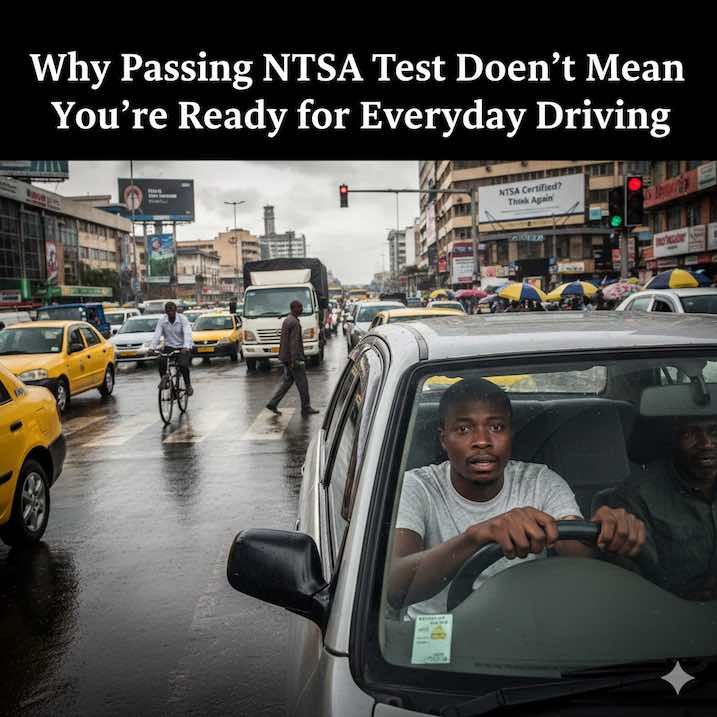
Kenya's roads present challenges that no simple test can prepare you for: unpredictable drivers, sudden hazards, aggressive matatu behavior, poor road markings, animals on the road, unmarked bumps, and the reality of night driving.
This article breaks down why the test is only the beginning, what new drivers should expect, and what you REALLY need to become a safe, confident driver.
1. Driving Tests Don't Replicate Real Traffic
The NTSA test is controlled and predictable:
-
No speeding motorists weaving between lanes
-
No bodas shooting out of blind spots
-
No unexpected roadblocks
-
No potholes or flooding
-
No aggressive matatus forcing their way in
Most tests take place in fenced compounds with examiners giving clear instructions. But Kenyan traffic behaves nothing like that.
In real life, you must make split-second decisions while interpreting chaotic traffic flow — something a test cannot simulate.
2. The Test Focuses on Procedure, Not Judgment
The NTSA examiner checks:
-
Mirror-signal-maneuver
-
Hill start
-
Reversing
-
Three-point turn
-
Simple road rules
-
Controlling speed
But good driving requires judgment, not just procedure:
-
When to overtake safely
-
How to handle a tailgater
-
How to anticipate a reckless matatu
-
How to spot a pedestrian before they dash across
-
When to brake gently vs. firmly
These are skills only experience can build.
3. Real Roads Come With Pressure You Don't Learn in Class
A driving test is structured, slow and calm.
But real driving involves psychological pressure:
-
A matatu honking behind you
-
An impatient driver flashing lights
-
A boda squeezing dangerously next to your door
-
A pedestrian running across the highway
-
A police officer waving you down
Passing a test won't prepare you for handling pressure while staying calm, which is a key safety skill.
4. Vehicle Control in Real Environments Is Very Different
The car used during training is often:
-
Small
-
Well-maintained
-
Easy to maneuver
But your real car may be:
-
Bigger (SUV or van)
-
More powerful
-
Older
-
Poorly aligned
-
Less forgiving
Reversing, parking, or cornering in Nairobi CBD with a full-sized car is completely different from practicing in an empty training field.
5. You Haven't Yet Developed Road Awareness
Passing a test proves you understand rules.
But safe driving requires situational awareness:
-
Knowing which lanes matatus suddenly branch from
-
Reading body language of pedestrians
-
Predicting boda movement patterns
-
Spotting early signs of brake lights ahead
-
Understanding traffic flow during rush hour
-
Anticipating "hidden" bumps in certain areas
Awareness is learned only through time and exposure.
6. The Test Doesn't Cover Night Driving
Most new drivers don't realize how hard night driving is:
-
Reduced visibility
-
Bright headlights from oncoming traffic
-
Hidden potholes
-
Drunk drivers
-
Livestock crossing rural roads
-
Poorly lit highways
-
Unmarked bumps and trenches
Night driving is a completely different skill set — and no NTSA test prepares you for it.
7. The Test Doesn't Include Bad Weather Driving
Rain is one of the most dangerous conditions on Kenyan roads:
-
Slippery tarmac
-
Reduced braking power
-
Foggy windscreens
-
Flooded roads
-
Aquaplaning dangers
Many new drivers panic the first time they drive in heavy rain — something not tested under NTSA conditions.
8. Emergency Situations Are Not Tested
Real drivers must know how to handle emergencies:
These real-world events separate a licensed driver from a competent driver.
So, What Should New Drivers Do After Passing the Test?
? 1. Practice with an experienced driver
Let someone guide you during your first weeks on the road.
? 2. Start with easier routes
Avoid CBD and major highways until you're more confident.
? 3. Practice night driving slowly
Start with short routes — avoid highways until you're ready.
? 4. Learn to read Kenyan traffic behavior
Experience will teach you how matatus, bodas and pedestrians behave.
? 5. Drive in different conditions
Rain, murram roads, uphill, traffic — all improve your skill.
? 6. Invest in defensive driving training
This is the REAL "driving school" every Kenyan motorist should take.
Conclusion: Passing the Test Is the Beginning, Not the End
Getting your license is a major milestone, but it's only the first step. The NTSA driving test confirms you know the basics — but everyday driving in Kenya demands skill, patience, awareness, quick judgment, and adaptability.
Real driving mastery comes from experience, not the test.




Comments
Post a Comment