Have you ever started your car on a cold morning only to hear an unsettling squealing sound from under the bonnet? If so, you're not alone. This common issue is often linked to your vehicle's serpentine belt and its tensioner—two critical components that most drivers overlook until something goes wrong.
What Is a Serpentine Belt?
The serpentine belt, also known as a drive belt or fan belt, is a continuous rubber belt that snakes around multiple pulleys in your engine. It delivers power to essential engine accessories such as the alternator, power steering pump, water pump, and air conditioning compressor. Without this single belt functioning properly, your vehicle's critical systems would fail, leaving you stranded—particularly problematic during Kenya's unpredictable traffic conditions or on remote highways.
The Critical Importance of Proper Belt Tension
Belt tension is not something to guess at or ignore. Proper tension is a carefully balanced engineering equation—too much causes damage to components, while too little causes the belt to slip.
When a Belt Is Too Loose
A loose serpentine belt creates several immediate problems. Symptoms include loud squealing noise when the engine starts or when steering is turned fully to one side, and a belt that keeps slipping off the pulley. The squealing occurs because the belt cannot maintain adequate friction with the pulleys, causing it to slip and generate heat.
More critically, a loose belt can snap without warning. When this happens, you'll experience:
- Loss of power steering, making the vehicle difficult to control
- Battery drainage as the alternator stops charging
- Engine overheating because the water pump stops circulating coolant
- Loss of air conditioning
When your cooling system stops, your engine can overheat within minutes—a serious concern for Kenyan drivers navigating Nairobi's traffic jams or Mombasa's coastal heat.
When a Belt Is Too Tight
Over-tightening poses equally serious risks. When a serpentine belt is too tight, it places extra stress on pulleys and bearings, causing excessive wear that leads to premature failure. The added tension accelerates rubber wear, causing the belt to crack or break earlier than expected.
Components particularly vulnerable to over-tightening include:
- Alternator bearings
- Water pump bearings
- Power steering pump components
- Idler pulley bearings
- Tensioner assembly bearings
An excessively tight belt can cause increased friction between the belt and pulleys, causing the belt to heat up and wear down more quickly. This is especially problematic in Kenya's climate, where ambient temperatures already stress engine components.
Understanding Belt Tensioners
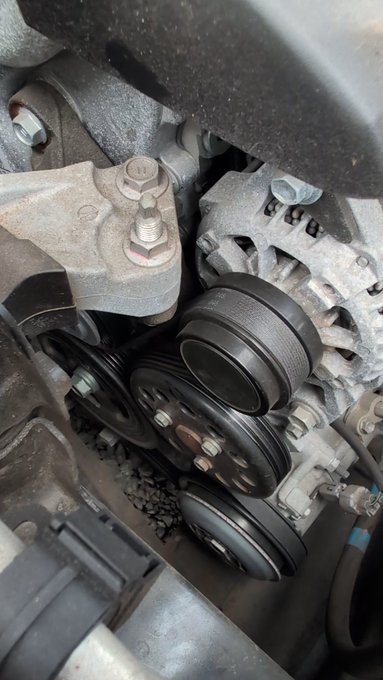
Modern vehicles typically use automatic spring-loaded tensioners designed to maintain constant pressure on the belt. The tensioner is responsible for maintaining a constant predetermined pressure on the belt, and if not functioning properly, the whole drive system is at risk.
However, tensioners don't last forever. The internal spring to keep tension on the belt does wear out and can cause the belt to slap around slightly. Common tensioner problems include:
- Seized internal mechanisms
- Worn bearings causing wobbling
- Weakened springs that cannot maintain proper tension
- Hydraulic tensioner oil leaks
In most cases, the tensioner lasts 40,000 to 70,000 miles and is typically replaced with the serpentine belt—though Kenyan driving conditions may accelerate wear.
How to Check Belt Tension on Manual Tensioners: The 90-Degree Test
For vehicles with manual (non-automatic) tensioners, there's a practical field test that mechanics have used for decades. This method works for cars where you manually adjust tension, which includes many older vehicles and some commercial vehicles common in Kenya.
The Twist Test Method
Here's how to check belt tension: go to the longest section of the belt and grab it with your hand. If you can twist the belt past the halfway point with the ribs facing upwards, it's too loose. If you can't twist the belt at all, it's too tight. If you can twist the belt to the halfway point with ribs pointed outwards and not past there, the belt tension is correct.
The test is straightforward:
- Locate the longest straight run of belt between two pulleys
- Grip the belt firmly between your thumb and forefinger at the center point
- Attempt to twist the belt perpendicular to its normal running position
- Evaluate the results:
- Too loose: Belt twists beyond 90 degrees (more than a quarter turn)
- Correct tension: Belt reaches approximately 90 degrees with moderate effort
- Too tight: Belt cannot reach 90 degrees
Important Caveats
This manual test method has limitations that Kenyan drivers should understand:
The 90-degree rule applies to V-belts and some accessory belts, but timing belts require specific manufacturer specifications, not rules of thumb. Always consult your vehicle's service manual when available.
The twist test is subjective—it depends on hand strength and individual interpretation. Users confirmed that setting tension per factory specification with a proper tension gauge resulted in being able to turn the belt about 90 degrees but no more, validating that the twisting method gets you close to correct.
For critical applications or if you're uncertain, professional mechanics use specialized tension gauges that measure in pounds of force or specific deflection measurements. These tools remove guesswork and ensure accuracy.
When This Method Doesn't Apply
Important: The 90-degree twist test is NOT suitable for:
- Vehicles with automatic spring-loaded tensioners (most modern vehicles)
- Timing belts
- Vehicles with hydraulic tensioners
- Any application where the manufacturer specifies a torque or tension measurement
Most modern vehicles sold in Kenya feature automatic tensioners that are non-adjustable. These systems are designed to maintain proper tension automatically throughout the belt's service life. If you have an automatic tensioner and experience belt noise or slippage, the tensioner itself likely needs replacement rather than adjustment.
Belt Replacement Intervals for Kenyan Conditions
Standard recommendations suggest serpentine belt replacement every 60,000 to 100,000 kilometers. However, Kenya's driving conditions may require more frequent attention:
Factors Accelerating Belt Wear in Kenya:
- Extreme heat exposure on coastal routes and during hot seasons
- Dust and debris on unpaved roads
- Extended idling in traffic congestion
- Temperature fluctuations between day and night
- Exposure to moisture during rainy seasons
The belt is exposed to external factors and degrades even when unused; consider replacing the serpentine belt every three to five years for vehicles with annual mileage of fewer than 10,000 miles. For Kenyan drivers who use their vehicles primarily for city commuting with lower annual mileage, time-based replacement may be more appropriate than mileage-based.
Under normal conditions, the belt needs replacement every 4 to 6 years, but those living in areas where temperature and humidity vary greatly throughout the year may need to change it more frequently—applicable to Kenya's diverse climate zones from Nairobi's temperate highlands to Mombasa's humid coast.
Visual Inspection: What to Look For
Regular visual inspections can prevent unexpected failures. During routine maintenance or when checking your engine oil, examine your serpentine belt for these warning signs:
Critical Warning Signs:
- Visible cracks on the belt surface or between ribs
- Glazed or shiny appearance (indicates slippage)
- Missing chunks of rubber
- Frayed edges
- Excessive rubber dust accumulation near the belt path
- Belt ribs that appear worn or split
A new serpentine belt has a soft felt-like surface on the ribbed side, but as it wears out, the rubber hardens and cracks, stretches, and loses tension. Catching wear early prevents roadside breakdowns.
Audible Warning Signs
Your ears can detect belt problems before visual inspection reveals them:
Listen for:
- High-pitched squealing when starting the engine cold
- Squealing when turning the steering wheel fully
- Chirping sounds when accelerating
- Continuous squealing that worsens with engine speed
- Rattling or slapping sounds from the belt area
A high-pitched squeal or short chirp from under the hood is one of the most common signs of a failing belt or weak tensioner.
The Complete System Approach
Professional mechanics emphasize that serpentine belt systems should be serviced as complete units. The serpentine belt, tensioner, and pulleys work together as a cohesive unit; one cannot function properly without the others also functioning properly.
When replacing a serpentine belt, experienced mechanics recommend simultaneously replacing:
- The belt tensioner
- Idler pulleys
- Any pulleys showing wear or roughness when spun by hand
This comprehensive approach prevents the frustration of a newly installed belt failing prematurely due to a worn tensioner or rough pulley bearing.
DIY vs. Professional Service in Kenya
For Kenyan car owners considering whether to check or replace belts themselves, several factors should guide your decision:
DIY Advantages:
- Lower cost (belts range from KSh 1,000–4,000 depending on vehicle)
- Immediate attention to the problem
- Learning valuable maintenance skills
Professional Service Advantages:
- Proper diagnostic tools and tension gauges
- Experience identifying related component wear
- Warranty on parts and labour
- Access to quality replacement parts
Quality serpentine belts are readily available through Kenyan suppliers including Autospeck on Kirinyaga Road, SpareZone Kenya, Woodville Auto Parts, and online through Jumia and Jiji. Brands like Dayco, Bando, Gates, and Continental are trusted options that perform well in Kenyan conditions.
Emergency Situations: What to Do
If your serpentine belt breaks while driving:
- Don't panic—the engine will continue running temporarily
- Immediately turn on hazard lights
- Steer becomes heavy—use extra force on the steering wheel
- Watch the temperature gauge—the engine will overheat quickly without the water pump
- Safely pull over as soon as possible—continuing to drive risks severe engine damage
- Turn off the engine once safely stopped
Do not attempt to drive any distance with a broken serpentine belt. The risk of catastrophic engine damage from overheating far exceeds the cost of a tow truck.
Preventive Maintenance Schedule
For optimal serpentine belt system health in Kenyan driving conditions:
- Every oil change: Visual inspection of belt condition
- Every 20,000 km: Detailed inspection including tensioner function
- Every 60,000 km or 4 years: Consider belt replacement
- At any service: Check for unusual noises from the belt area
- Before long journeys: Thorough belt system inspection
The Bottom Line
The serpentine belt is one of your vehicle's most critical components, yet it's often overlooked until failure occurs. Understanding proper belt tension and recognizing warning signs can prevent inconvenient breakdowns and expensive repairs.
For vehicles with manual tensioners, the 90-degree twist test provides a reasonable field check for tension—though professional assessment remains the gold standard. For modern vehicles with automatic tensioners, focus on regular inspections and timely replacement rather than adjustment attempts.
Remember: A serpentine belt that is too loose may slip and squeal, while one that is too tight can cause excessive wear on the belt, pulleys, and bearings, leading to premature failure of these components. Finding the correct balance ensures reliable vehicle operation.
Don't wait for that morning squeal to become a roadside emergency. Include serpentine belt inspection in your regular maintenance routine, and address problems promptly when they arise. Your vehicle—and your peace of mind—will thank you.
For professional serpentine belt service in Nairobi and across Kenya, consult qualified mechanics who can properly diagnose belt system issues using appropriate tension measurement tools. Quality replacement belts are available through reputable suppliers including Autospeck Belt Centre, SpareZone Kenya, Woodville Auto Parts, and other trusted automotive parts dealers.




Comments
Post a Comment