The Crisis of Architectural Identity in National Heritage
Don't get me wrong—Kenya's State House looks good, no doubt. The recent renovations have produced a building that is undeniably handsome, polished, and modern. Only if it were another building—a hotel, a university, or a random office block—would this transformation be universally celebrated. But therein lies the fundamental problem that has sparked heated debate across Kenya and captured international attention: State House is not just any building. It is the architectural embodiment of national sovereignty, the physical manifestation of Kenya's identity as an independent nation.
The beauty of a national heritage building lies not merely in its aesthetic appeal but in its signature—the one unmistakable thing that validates its presence in the landscape of national consciousness. That distinctive character, accumulated over more than a century of history, is what transforms architectural design into national symbol. And that is precisely what Kenya has lost in the 2023-2025 renovations of State House Nairobi, creating what can only be described as an illegitimate beauty: a structure that looks impressive but has been stripped of the very qualities that made it architecturally and culturally significant.
This article examines the architectural identity crisis at the heart of Kenya's State House controversy, drawing comparisons with how other African nations have grappled with colonial architectural legacies, exploring what makes national heritage buildings legitimate symbols of statehood, and analyzing why the recent renovations represent not just a change of appearance but a fundamental misunderstanding of what these buildings mean to national identity.
The Original State House: Herbert Baker's Colonial Masterpiece
To understand what has been lost, we must first understand what State House Nairobi originally was. Built in 1907 as Government House during the British colonial period, the building was designed by Sir Herbert Baker, one of the British Empire's most celebrated architects. Baker, born in 1862, was the dominant architectural force in early 20th-century colonial construction, responsible for iconic structures across the British Empire from South Africa to India.
In Kenya, Baker's influence extended far beyond State House. He designed the Supreme Court (originally the High Court), Kenya Railways Central Station, and numerous other structures that defined Nairobi's architectural character. His work borrowed from world capitals—Washington DC, Paris, Cape Town, New Delhi, and La Plata—synthesizing these influences into what became known as colonial neoclassical architecture with distinctly Palladian features.
The Architectural Signature of the Original Design
The original State House possessed several defining characteristics that gave it architectural legitimacy and cultural significance:
The Iconic Red-Tiled Roof: Perhaps the most recognizable feature, the distinctive Mangalore red-tiled roof became State House's visual signature, visible from afar and instantly identifiable. This wasn't merely decorative—it represented a specific architectural tradition and climate-responsive design philosophy.
Palladian Proportions and Symmetry: The building exemplified classical Palladian design principles with its balanced, symmetrical facades. This symmetry wasn't arbitrary; it conveyed order, stability, and permanence—qualities expected of government architecture.
Corinthian Columns: Grand columns flanked the entrance, establishing visual hierarchy and lending ceremonial gravitas appropriate to a seat of executive power.
Ornate Victorian Details: The chimneys, dormers, and decorative elements reflected late Victorian architectural sensibility, placing the building within a specific historical and stylistic context.
Integration with Landscape: Baker's design included careful landscape integration, with the building sited strategically on elevated ground in Kilimani to avoid flooding while commanding views of the surrounding area. The relationship between architecture and landscape was intentional and meaningful.
Material Authenticity: The use of Njiru Blue Stone, timber trusses, and stone archways connected the building to local materials and craftsmanship while demonstrating high-quality construction methods.
This was not generic architecture. It was architecture with character, specificity, and identity—qualities that would prove essential to its transformation from colonial symbol to independent national emblem.
The Post-Independence Dilemma: Inheriting Colonial Architecture
When Kenya gained independence in 1963, the new nation inherited not just political institutions but the physical infrastructure of colonial governance, including Government House, which was renamed State House. This created a dilemma shared by newly independent nations across Africa: how to handle architectural symbols of colonial power?
Different African nations resolved this dilemma in strikingly different ways, and examining these approaches illuminates why Kenya's current situation is problematic.
Ghana's Bold Architectural Statement: The Flagstaff House
Ghana, the first sub-Saharan African country to gain independence in 1957, provides a powerful contrast to Kenya's approach. Under President Kwame Nkrumah, Ghana embarked on an ambitious nation-building project that included creating new architectural expressions of African identity and modernity.
While Ghana retained some colonial buildings, Nkrumah commissioned entirely new structures to house government functions, most notably the Flagstaff House (now Jubilee House), which eventually replaced the colonial Osu Castle as the presidential palace. More recently, Ghana constructed a dramatic new presidential headquarters shaped like an Asante stool—an explicitly African architectural form drawing on traditional Ghanaian design.
This approach sent a clear message: Ghana's independence was real, and the nation's architecture would reflect African, not European, aesthetic values and cultural references. The buildings proclaimed national identity through their very form.
Senegal's Modernist Vision: Leopold Senghor's Cultural Architecture
Senegal under President Leopold Sedar Senghor pursued a different but equally intentional strategy. Rather than either preserving colonial architecture or creating vernacular African forms, Senegal embraced cutting-edge modernist architecture as an expression of a confident, forward-looking African nation.
Buildings like the Hotel Independence in Dakar and the Foire Internationale de Dakar (FIDAK) complex exemplified this approach. These were not colonial buildings repurposed or traditional forms modernized—they were bold, contemporary architecture that declared Senegal's place in the modern world while creating a distinctly Senegalese modernism.
The architectural message was sophisticated: Senegal would neither be trapped by colonial past nor retreat into romanticized tradition, but would forge its own modern African identity through contemporary design.
Côte d'Ivoire's Afro-Futurism: Little New York in West Africa
Côte d'Ivoire took yet another path. In the decades following 1960 independence, the de facto capital Abidjan constructed a remarkable collection of high-impact, high-modernist buildings—dramatic high-rise towers and abstract sculptural forms that earned the city the nickname "little New York."
This architectural vision projected the Ivoirian state as a spectacle, a product of post-colonial economic dynamism unencumbered by historical baggage. The buildings depicted an exceptional vision, apparently free from compromise or historical depth. Whether one celebrates or critiques this approach, it represented a clear, intentional architectural statement about national identity and aspirations.
Kenya's Passive Approach: Retention Without Transformation
Kenya, by contrast, made essentially a non-decision. State House was simply renamed and retained largely as built. For decades, this worked reasonably well. The building's imposing presence and undeniable architectural quality allowed it to transition from symbol of colonial authority to symbol of sovereign governance without major modification.
This passive approach had an inadvertent benefit: the building retained its architectural integrity. While it remained a colonial-era structure, at least it remained an architecturally coherent colonial-era structure. The signature that validated its presence—Baker's distinctive neoclassical design—stayed intact.
Kenya did construct some modernist buildings in the independence era, including the Kenyatta International Conference Centre (KICC), which became an iconic symbol of independent Kenya. But State House itself remained essentially unchanged, creating a curious architectural duality: Kenya's new, African identity expressed through buildings like KICC, while the seat of executive power remained housed in British colonial architecture.
This arrangement, while imperfect, maintained architectural honesty. State House acknowledged its colonial origins through its preserved design while serving new purposes under independent governance. The building's history was visible in its architecture, creating a layered narrative about Kenya's journey from colony to independent nation.
The 2023-2025 Renovations: Erasing Architectural Identity
The recent State House renovations, undertaken from December 2023 through early 2025 under President William Ruto's administration, represent a radical departure from this preservation approach. Contracted to Chinese firms and budgeted at KSh 1.7 billion over three years (with KSh 250 million allocated for 2024/2025 and KSh 894.9 million for 2025/26), the renovations fundamentally altered the building's character.
What Was Changed
The transformation was comprehensive and, to many observers, shocking:
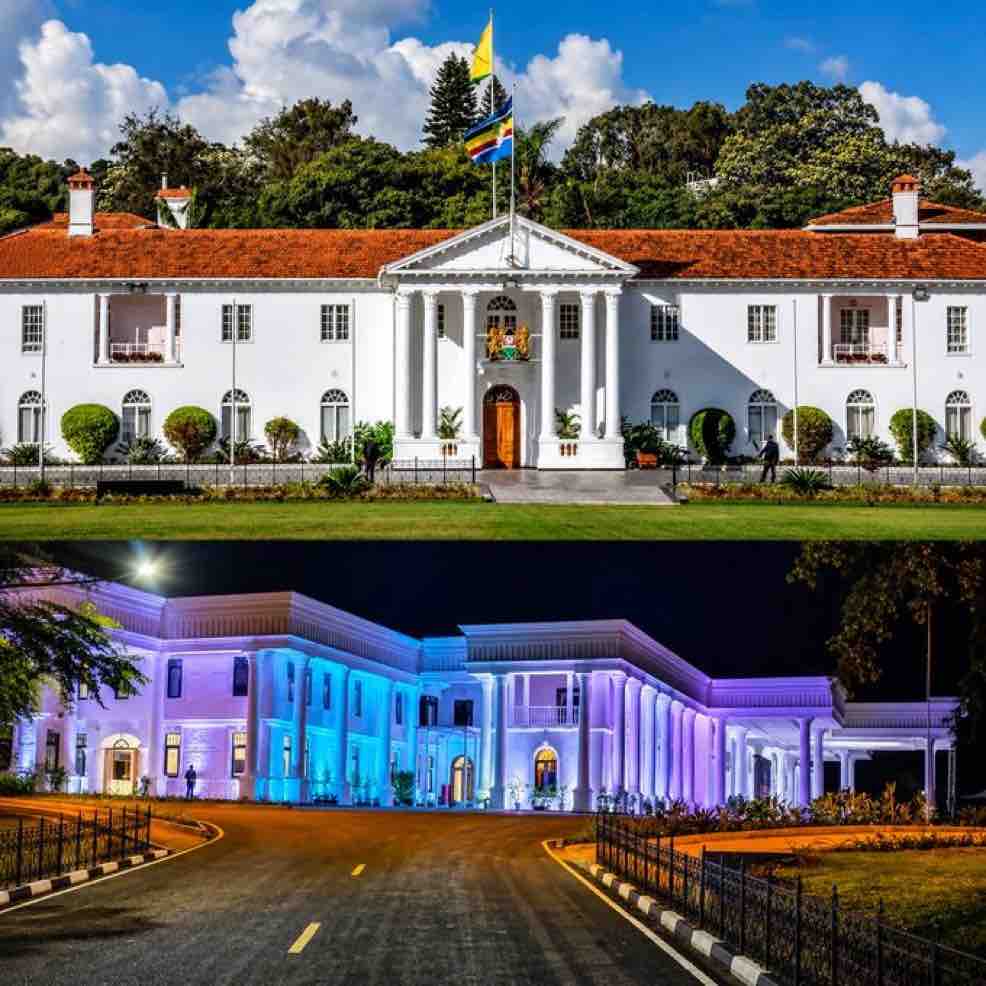
The Roof: The iconic red-tiled Mangalore roof—State House's most recognizable feature—was removed entirely. This single change alone eliminated the building's visual signature. From a distance, State House no longer looked like State House.
The Dormers and Chimneys: The distinctive dormer windows and ornate chimneys that gave the roofline character and visual interest disappeared. The chimneys were hidden, the dormers removed, creating a flattened, simplified roofline.
The Facade: The building received a new minimalist facade with white walls replacing the original materiality and color palette. The careful proportions and visual hierarchy of Baker's design were simplified.
The Courtyard: The asphalt courtyard was replaced with grey cabro blocks, changing the building's relationship to its immediate surroundings.
The Wooden Pavilion: A historic wooden pavilion structure was demolished entirely, removing an element of the complex's architectural ensemble.
Landscaping: Plants that historically graced the entrance were removed, altering the landscape-architecture integration that was part of Baker's original design concept.
Windows and Finishes: Original window designs and interior finishes were replaced with modern alternatives, further erasing historical architectural details.
The Architectural Result: Generic Elegance
The unveiling in January 2025, during a state visit by Guinea-Bissau's President Umaro Sissoco Embaló, revealed a building that was undeniably handsome. With its white walls, clean lines, modern lighting, and manicured grounds, the renovated State House projected an image of efficiency, contemporary governance, and refined taste.
The nighttime lighting scheme, in particular, was impressive—soft white and blue uplighting gave the building a glowing presence against the Nairobi night sky, while subtle pathway lighting added visual drama.
From a purely aesthetic standpoint, many might argue the building looks better now than before. It appears cleaner, more polished, more in tune with contemporary architectural preferences for minimalism and simplicity.
And therein lies the problem.
The Crisis of Illegitimate Beauty: When Good Design Becomes Bad Heritage
State House now possesses what can only be called illegitimate beauty. It looks good—perhaps even better than before in conventional aesthetic terms—but it has lost the signature that validated its presence as a national heritage building.
Understanding Architectural Legitimacy
Architectural legitimacy for heritage buildings isn't about whether a structure is attractive. It's about whether the building's physical form authentically represents its historical, cultural, and symbolic significance. A legitimate heritage building is one where appearance and meaning align.
Consider parallels from other contexts:
The White House, Washington DC: The White House's neoclassical design, established in 1800 and refined through the 19th century, has been meticulously preserved through numerous renovations. While interiors have been modernized, the exterior retains its defining features: the portico, the columns, the proportions. This isn't because American architects can't design something more contemporary—it's because the White House's architectural legitimacy depends on continuity with its historical form. The building's appearance validates its presence as the symbol of American executive power.
Buckingham Palace, London: Despite being famously uncomfortable and outdated in many ways, Buckingham Palace has never been radically redesigned. Its facade has remained essentially unchanged since the early 20th century because its legitimacy as a symbol of British monarchy depends on architectural continuity. The building looks like what people expect the monarch's official residence to look like, and that expectation is based on historical architectural character.
The Kremlin, Moscow: While extensively renovated and modified over centuries, the Kremlin's defining architectural elements—the walls, the towers, the distinctive cathedral domes—have been carefully preserved because these elements constitute the building complex's identity. Without these signature features, the Kremlin would cease to be recognizable as the Kremlin, regardless of how attractive any replacement might be.
In each case, these buildings possess legitimacy because their physical appearance authenticates their historical and symbolic role. They look like what they are supposed to look like based on their history and significance.
Why State House's Beauty is Illegitimate
State House Nairobi no longer possesses this alignment between appearance and significance. Consider what has been lost:
Historical Legibility: The building no longer clearly reads as a 1907 colonial-era structure designed by Herbert Baker. The architectural language that placed it in a specific time, place, and design tradition has been partially erased. A viewer who didn't know the building's history might date it to almost any period in the last 50 years.
Visual Continuity: Kenyans who grew up seeing State House with its red-tiled roof and distinctive profile no longer see that building. The visual image that represented presidential authority in Kenya for over a century has been changed. This severs the visual continuity between past and present.
Architectural Integrity: Baker designed State House as an integrated composition where roof, walls, windows, landscape, and details worked together to create a unified architectural statement. By selectively changing some elements while retaining others, the renovations have created architectural incoherence—parts of different design philosophies uncomfortably coexisting.
Symbolic Authenticity: A national symbol's power comes partly from its authenticity—the sense that this specific building, in this specific form, has witnessed and housed the nation's history. When that form is radically altered, the authenticity is compromised. The building becomes a replica of itself, a simulation rather than the real thing.
Cultural Distinction: The renovations have made State House look more like generic contemporary government architecture found anywhere in the world. The specific cultural and historical qualities that made it distinctively Kenyan (even if originally British-designed) have been diminished. It could now be a ministry building, a hotel, a corporate headquarters—exactly the problem identified in the opening statement.
This is why the beauty is illegitimate: the building's appearance no longer validates its presence as Kenya's State House. It's attractive, but that attractiveness is generic rather than specific, contemporary rather than historically grounded, fashionable rather than timeless.
The Architectural Association of Kenya's Critique: Professional Perspective
The Architectural Association of Kenya's response to the renovations was swift and harsh, describing the redesign as "unrecognisable" and warning about the dangers of ignoring architectural heritage. This professional critique deserves serious consideration.
Architects understand something the general public sometimes misses: buildings aren't just objects to be evaluated on whether they look nice. Buildings are cultural artifacts, historical documents, and symbolic systems. When you change a building's architecture, you change its meaning.
The AAK's core argument was that State House's architectural heritage had value independent of whether any particular person liked or disliked the building's appearance. That heritage value resided in the building's:
- Historical significance: As a structure from a specific historical period with documented historical events and associations
- Architectural significance: As an example of a specific architectural style by a notable architect
- Cultural significance: As a symbol that had accrued meaning through its long association with Kenyan governance
- Educational significance: As a tangible link to Kenya's architectural and political history
By radically altering the building, the renovations damaged or destroyed these forms of significance. The AAK argued this represented a failure to understand what heritage preservation means and why it matters.
Comparing Costs: Material vs. Cultural
The financial cost of the renovations—approximately KSh 1.7 billion (about $13 million USD)—has generated controversy, particularly given Kenya's economic challenges. But the more profound cost may be cultural rather than financial.
Consider what KSh 1.7 billion purchased:
Materially: A renovated building with modern systems, contemporary finishes, improved lighting, updated courtyard surfaces, and a refreshed appearance.
Culturally: The partial erasure of architectural heritage, the loss of visual continuity with Kenya's past, and the diminishment of State House's legitimacy as a symbol of national sovereignty.
Had the same funds been invested in sensitive renovation that preserved defining architectural features while modernizing infrastructure, Kenya would have gotten both improved functionality and preserved heritage. Instead, Kenya got improved functionality at the cost of heritage—a trade-off that many Kenyans found unacceptable.
The stark comparison with Ghana is instructive: Ghana spent comparable or greater sums constructing entirely new presidential facilities in explicitly African architectural languages. The result was buildings that clearly expressed post-colonial national identity while creating new architectural heritage for future generations. Kenya spent comparable sums erasing architectural heritage to create something that, while pleasant, expresses no particular identity at all.
The Colonial Architecture Dilemma: To Preserve or Transform?
The State House controversy raises fundamental questions about how post-colonial nations should handle colonial architectural heritage. This isn't a simple question, and reasonable people disagree.
The Case for Radical Transformation
Some argue that Kenya had every right—indeed, an obligation—to transform State House. The argument runs:
Decolonization Should Be Total: If Kenya is truly independent, why should its State House remain in the form designed by British colonial architects? Isn't maintaining colonial architecture a form of continuing cultural colonialism?
Symbols Matter: The president of Kenya should work in a building that symbolizes African identity, not British imperial power. The appearance of State House sends messages about what Kenya values and who Kenya is.
Practical Modernization: Old buildings need renovation. If you're going to renovate anyway, why not modernize completely rather than being constrained by historical design?
Contemporary Legitimacy: Perhaps the renovated State House's legitimacy comes not from historical continuity but from representing contemporary Kenya—a modern, forward-looking nation unburdened by colonial past.
These aren't frivolous arguments. The question of how much deference post-colonial nations owe to colonial architectural legacies is genuinely complex.
The Case for Preservation
The counter-argument, however, is compelling:
History Cannot Be Erased: Kenya's colonial period happened. It was real, consequential, and shaped the nation's development. Trying to erase architectural evidence of that period doesn't change history—it just makes history less visible and legible.
Preservation Isn't Celebration: Preserving colonial architecture doesn't mean celebrating colonialism. It means acknowledging historical reality and maintaining tangible connections to the past, including difficult pasts. Germany preserves concentration camps not because it celebrates the Holocaust but because remembering requires physical evidence.
Architectural Quality Transcends Origin: Baker's State House, whatever one thinks of British colonialism, was a well-designed building of significant architectural merit. Quality architecture has value regardless of its political context.
Transformation Through Use: The most powerful response to colonial architecture isn't destruction or radical alteration but transformation through use—taking buildings designed for colonial purposes and putting them to work for independent, democratic governance. This demonstrates that colonialism is past and independence is real.
Heritage Loss is Permanent: Once destroyed or radically altered, architectural heritage can't be recovered. You can always change a building later, but you can't unchanged it once changes are made.
Alternative Approaches Existed: If Kenya wanted to move beyond colonial architecture for its State House, the solution wasn't to gut the existing building but to construct a new presidential palace—as Ghana, Senegal, and others did—while preserving the historic State House as a museum or other public use.
What Makes Presidential Architecture Legitimate: Lessons from Around the World
Looking globally at presidential and governmental architecture reveals certain patterns that shed light on the State House situation.
Continuity Creates Legitimacy
Almost universally, the most respected government buildings are those that maintain continuity with their historical forms:
The White House (USA): Constantly renovated internally, scrupulously preserved externally 10 Downing Street (UK): Appears modest and old-fashioned; this is intentional and carefully maintained Élysée Palace (France): 18th-century architecture preserved despite constant interior modernization The Kremlin (Russia): Medieval and Renaissance architecture maintained through revolutionary changes in government Rashtrapati Bhavan (India): Baker's colonial-era design preserved and honored by independent India as a national treasure
These buildings' legitimacy as seats of power depends partly on their visual continuity over time. People recognize them, associate them with governmental authority, and understand them as symbols because of this continuity.
Purposeful Design Expresses Identity
Alternatively, newly designed government buildings that successfully express national identity do so through purposeful, specific architectural choices:
The Reichstag (Germany): Norman Foster's renovation preserved the historic exterior while adding a modern glass dome—old and new in dialogue, history acknowledged rather than erased The Parliament of Ghana: Traditional African design elements integrated into modern government architecture Senegal's Modernist Monuments: Deliberately African modernism created through original 20th-century design Australia's Parliament House: Landscape-integrated design reflecting Australian environmental values
Each of these works because the architecture clearly expresses something specific about national identity, values, or history. They're not generic; they're particular and purposeful.
Generic Architecture Lacks Symbolic Power
What rarely works is generic contemporary design that could be anywhere. When government buildings look like corporate offices or upscale hotels, they struggle to function as effective national symbols. They're pleasant but not meaningful, attractive but not resonant.
This is precisely State House Nairobi's current problem: it's become more generic in pursuit of becoming more contemporary.
The Path Not Taken: Sensitive Renovation
The tragedy of the State House renovations is that an alternative approach was entirely feasible. Sensitive heritage-conscious renovation could have achieved modernization while preserving architectural identity.
Consider what might have been done:
Preserve Defining Features: Retain the red-tiled roof, chimneys, dormers, original windows, and facade materials—the signature elements that make State House recognizable
Modernize Infrastructure: Update electrical, plumbing, HVAC, security systems, and communication technology—all essential but invisible from the outside
Restore Rather Than Replace: Where elements had deteriorated, restore them to original specifications rather than replacing them with contemporary alternatives
Improve Energy Efficiency: Add insulation, upgrade glazing, improve building systems—all achievable without changing exterior appearance
Enhance Accessibility: Modernize to meet contemporary accessibility standards through internal modifications that don't compromise exterior architectural integrity
Landscape Enhancement: Improve and maintain historic landscape elements while adding contemporary necessities like modern security features and parking
Interior Modernization: Fully renovate interior spaces with contemporary finishes while respecting historic architectural elements worth preserving
This approach—standard practice in heritage renovation worldwide—would have cost approximately the same amount while preserving what made State House architecturally and culturally significant. The building would have emerged functionally modern but historically authentic.
Numerous examples demonstrate this approach's feasibility: The White House underwent massive renovations in the 1940s and 1950s that gutted and rebuilt the interior while scrupulously preserving exterior architectural character. Britain's Palace of Westminster (home of Parliament) has been continuously renovated while maintaining its iconic Gothic Revival exterior. India's Rashtrapati Bhavan has been comprehensively modernized while honoring Baker's original vision—the same architect who designed Kenya's State House.
Kenya chose a different path, and that choice now cannot be reversed.
Divided Opinion
Kenyan public response to the renovations has been sharply divided, revealing deep disagreements about national identity, heritage, and governmental priorities.
Those Who Support the Changes
Supporters of the renovation argue:
- The building looks more modern and well-maintained
- Old buildings need updating; nostalgia shouldn't prevent improvement
- Too much focus on colonial architecture keeps Kenya mentally colonized
- The lighting and aesthetic improvements enhance national image
- Presidents should work in contemporary, functional spaces
- The red tile roof was associated with colonial oppression and appropriately removed
Those Who Oppose the Changes
Critics counter:
- The building has lost its distinctive identity and looks generic
- Architectural heritage was destroyed unnecessarily
- The renovation prioritized appearance over historical authenticity
- Massive spending occurred while ordinary Kenyans struggle economically
- The changes reflect poor understanding of heritage conservation
- Kenya missed an opportunity to demonstrate sophisticated heritage management
- The architectural profession's advice was ignored
The Generational Divide
Interestingly, younger Kenyans who grew up after independence sometimes support the changes more than older Kenyans who remember the building in its original form. This suggests that personal memory and lived experience of State House's architectural identity influences how people evaluate the changes.
For older Kenyans, State House with its red-tiled roof is part of their mental image of what presidential authority looks like in Kenya. Changing that image feels destabilizing, regardless of whether the new appearance is objectively better.
For younger Kenyans with less emotional investment in the original design, the question may be simpler: does it look good? If yes, the renovation succeeded. The loss of historical character may not register as strongly.
Kenya's Architectural Identity Crisis
The State House controversy is symptomatic of a broader challenge: Kenya hasn't developed a clear architectural identity for its post-colonial nationhood.
Ghana has its modernist monuments and vernacular-inspired new buildings. Senegal has its distinctive West African modernism. South Africa has its post-apartheid architecture of reconciliation. Even Tanzania developed "African socialist" architecture under Nyerere.
But Kenya? Kenya has buildings from various eras and influences without a unifying architectural vision that says "this is Kenya." We have colonial buildings like the old State House, modernist structures like KICC, contemporary glass towers in Upper Hill, and now a renovated State House that looks like it could be anywhere.
This lack of architectural identity isn't just an aesthetic issue—it reflects uncertainty about national identity more broadly. What does it mean to be Kenyan? What are Kenyan values? How should Kenya's built environment express those values?
These questions have never been satisfactorily answered, and as a result, Kenya's approach to its built heritage has been ad hoc and reactive rather than strategic and purposeful.
The State House renovations represent a lost opportunity to address these questions. Rather than starting a national conversation about how Kenya should architecturally express its identity in the 21st century, the renovations proceeded without meaningful public engagement, professional architectural input, or consideration of heritage significance.
Learning from This Experience
While the State House renovations cannot be undone, Kenya can learn from this experience for future heritage management:
Develop National Heritage Policy
Kenya needs comprehensive heritage protection policies specifically addressing government buildings and national monuments. Such policies should require:
- Heritage impact assessments before major renovations
- Public consultation on changes to nationally significant buildings
- Professional architectural review for heritage structures
- Explicit standards for what changes are appropriate and what alterations would damage heritage value
Engage Architectural Professionals
The Architectural Association of Kenya and other professional bodies should be consulted before, not after, major renovations of significant buildings. Architects possess expertise in heritage conservation that should inform decision-making.
Consider Alternatives to Renovation
When existing presidential or governmental facilities are inadequate, constructing new buildings designed to express contemporary Kenyan identity may be preferable to radically altering historic structures. This allows creation of new landmarks while preserving old ones.
Learn from Best Practices
Kenya should study how other nations—particularly other post-colonial African nations—have handled similar challenges. The experiences of Ghana, Senegal, India, and others offer valuable lessons.
Prioritize Architectural Education
Better public understanding of why architectural heritage matters would generate more informed debate about these issues. Architectural education shouldn't be only for professionals; citizens need basic literacy about their built environment.
Document and Study
Even though State House's original character has been compromised, thorough documentation of what existed before is essential for historical record. Future generations will want to understand what the building looked like before 2025.
The Signature That Validates Presence
State House Nairobi is undeniably a handsome building today. The renovations have produced a structure that is elegant, well-lit, contemporary, and impressive. No one can honestly claim it looks bad.
But beauty alone does not make architectural legitimacy. The beauty of a national heritage building—particularly one as symbolically important as a presidential palace—lies not just in how it looks but in its signature: the distinctive, recognizable character that validates its presence as a specific building with specific historical and cultural significance.
That signature has been compromised, if not lost entirely. State House no longer clearly proclaims its identity as State House. It looks like what it is—a renovation of a historic building—but it no longer looks like what it was—a distinctive, character-rich architectural landmark that had accrued meaning over more than a century.
In pursuing beauty, Kenya has created what might be called illegitimate beauty: an attractive building that has lost the qualities that gave it legitimacy as a national symbol. The renovated State House could indeed be a hotel, a university, or a random office block. That's precisely the problem.
Contrast this with how other nations have handled similar challenges. When India renovated Rashtrapati Bhavan—also designed by Herbert Baker—they modernized extensively while scrupulously preserving the building's architectural identity. When Ghana wanted a presidential palace reflecting African identity, they built a new one rather than gutting a colonial building. When Senegal sought to express post-colonial modernity, they created new modernist architecture rather than erasing old buildings.
Each of these approaches maintained architectural integrity: either preserve what exists because its historical form has value, or build something new that intentionally expresses contemporary identity. What undermines integrity is the middle ground: radically altering historic buildings in ways that erase their historical character without creating compelling new identity.
Kenya chose that middle ground, and the result is a building that satisfies neither those who valued State House's heritage nor those who wanted genuinely African architecture for the seat of Kenyan sovereignty. It's a compromise that doesn't compromise successfully—neither fish nor fowl, neither authentic restoration nor purposeful new design.
The controversy will eventually fade. Kenyans will get used to State House's new appearance, and future generations who never knew the original won't miss what was lost. But something has been lost nonetheless: a piece of architectural heritage, a layer of historical legibility, and an opportunity to demonstrate sophisticated heritage management.
Buildings are more than just structures; they're carriers of meaning, markers of identity, and links to the past. When we alter them thoughtlessly, we don't just change how they look—we change what they mean and compromise their ability to serve as symbols that connect past, present, and future.
State House Nairobi is beautiful. But it's an illegitimate beauty—attractive but unvalidated, pleasant but disconnected from the historical and cultural significance that should give a national symbol its power and authority.
The building looks good. But it no longer looks like State House. And that's exactly the problem.




Comments
Post a Comment